RISHABHSOLAR SOLUTIONS

Who is the solar for?

Rishabh Solar Solutions, Raipur

For your home

Residential solar

Rooftop systems for homes and housing societies, with the subsidy handled for you.

Explore home solar
For your business

Commercial and industrial solar

Systems for shops, offices, hospitals, schools, factories and plants.

Explore business solar
Solar for homes in Raipur

Without the sun, there is no life. Now let it power your home.

Rooftop solar for homes and housing societies, sized to your electricity bill, with the subsidy and net-meter paperwork handled for you.

₹1,08,000Government subsidy a 3 kW home system can get, central and state together.

Get a solar quotation

For homes and housing societies.

The sun is the heart of our solar system, and of every life in it. It grows our food, warms our homes and lights our days. Its light reaches your roof in about eight minutes.

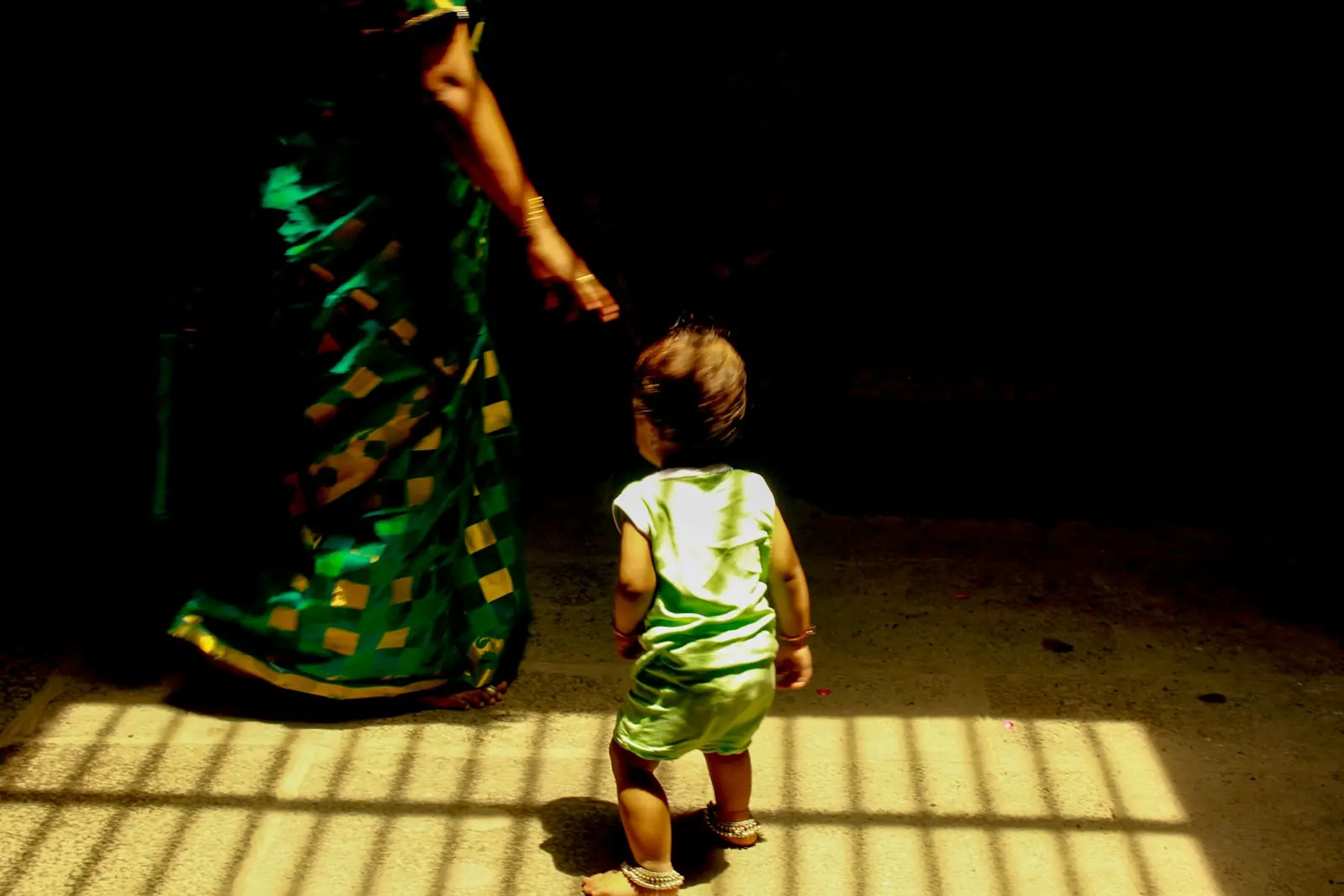
A mother and her small child walking through bands of sunlight at home
How it works

From morning light to your switchboard

  1. Panels turn light into power.No fuel, no noise and no moving parts, for 25 years and more.
  2. The inverter makes it usable.It turns the panels' direct current into the power your fans, lights and AC already run on.
  3. Your home uses it first.Every unit your roof makes is a unit you don't buy from the grid.
  4. Extra power earns you credit.Surplus flows to the grid through a net meter and is credited against your bill.
Is solar right for your home?

Four things decide if your home is a good fit

  • You own the roofAn independent house, or a flat where the housing society agrees to the installation.
  • The roof gets sunAbout 100 square feet of shade-free roof for every 1 kW, facing open sky for most of the day.
  • Your bill is worth cuttingHomes using 150 units a month or more save the most. Below that, a 1 kW system is usually enough.
  • A CSPDCL home connectionThe subsidy is for residential connections only, and the system cannot be larger than your sanctioned load.
Which size fits

Match the system to the units you use

SystemUnits you use a monthRoof spaceTotal subsidy
1 kWUp to 120About 100 sq ft₹45,000
2 kW120 to 240About 200 sq ft₹90,000
3 kW240 to 360About 300 sq ft₹1,08,000
5 kW360 to 600About 500 sq ft₹1,08,000
10 kW600 to 1,200About 1,000 sq ft₹1,08,000

A 1 kW system makes about 120 units a month in Raipur's sun. Subsidy shown is central plus Chhattisgarh state, and stops rising at 3 kW. Your exact size comes from your bills and a site visit.

Savings

What could your roof save?

Move the slider to your monthly bill.

Monthly electricity bill
₹3,000
You could save about₹0 a year
System size0 kW
Roof space0 sq ft
System price₹0
Subsidy₹0
You pay₹0
Pays back in0 years
25 years of panel life: paying back, then free power
Paying back

What decides the price

Two quotes for the same size can differ. Here is why.

Panels

Made in India, approved

Subsidy needs DCR panels: Indian-made cells, on the government's approved list. They cost more than imported panels, and the subsidy more than covers the difference.

Inverter

On-grid or hybrid

An on-grid inverter is the lowest-cost choice. A hybrid inverter with a battery adds backup during power cuts, at a higher price.

Structure

Height and steel

A raised, galvanised steel structure costs more than a low one, but leaves room to walk, clean and use the roof underneath.

Your roof

Concrete or tin sheet

Concrete roofs and tin sheds need different mounting. Long cable runs from the roof to the meter also add cost.

Paperwork

Net meter and fees

CSPDCL's net meter and connection charges are part of the total. A good quote lists them instead of adding them later.

Tax

GST

GST applies to the system. Ask for a quote that shows the price with GST included, so you can compare like for like.

Types of system

On-grid, hybrid or off-grid

On-gridHybridOff-grid
How it worksConnected to CSPDCL through a net meterNet meter plus a batteryBattery only, no grid
Power during a cutNo, it switches off for line workers' safetyYes, for the loads you chooseYes
SubsidyYesYes on the panels; the battery is not coveredNot under PM Surya Ghar
CostLowestHigherHighest per unit
Best forMost homes in RaipurHomes with frequent power cutsPlaces with no grid connection
Life at home

Everything your home does, running on the sun

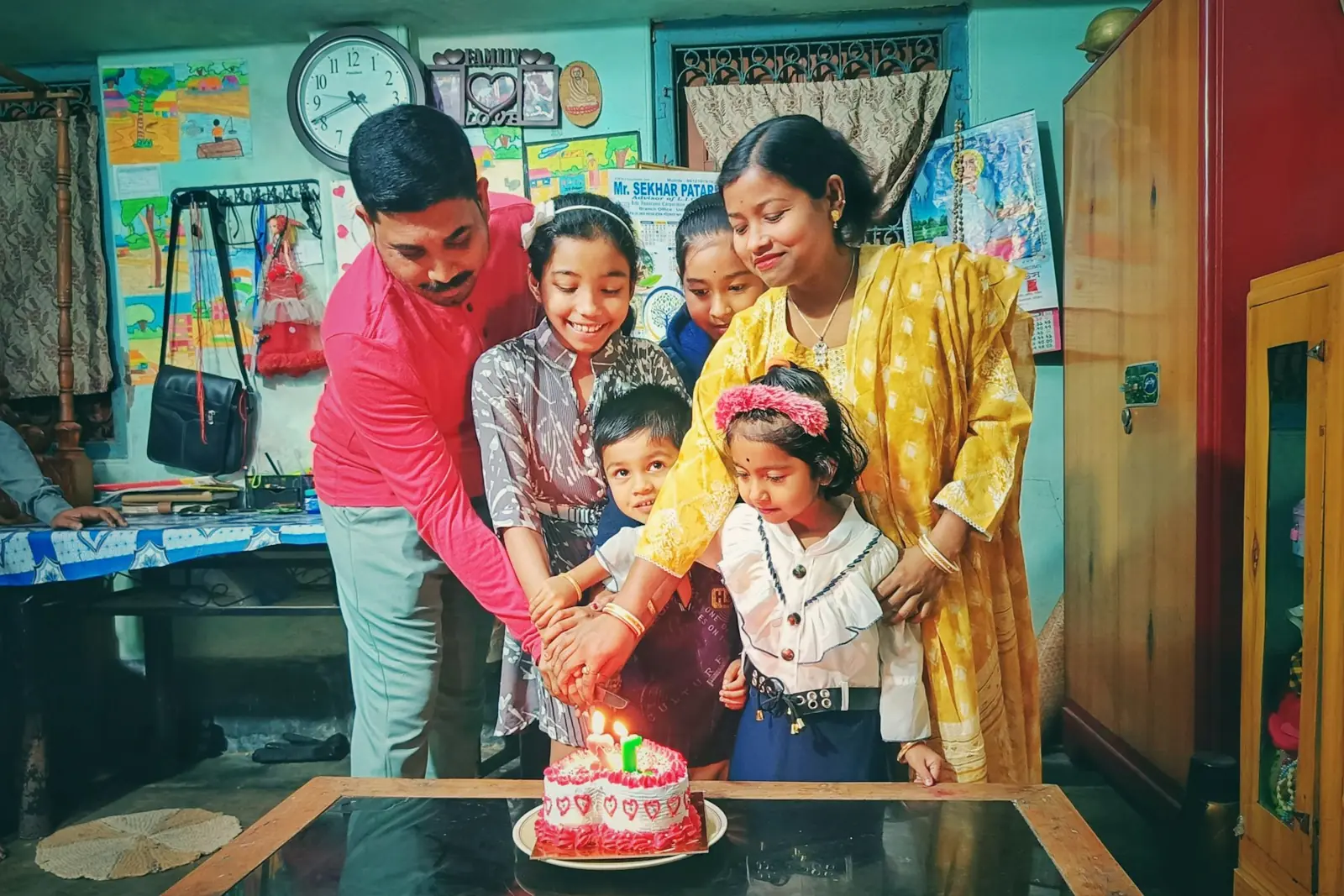
A family celebrating together at home in front of a decorated wall
Every celebration, lit by your own roof.
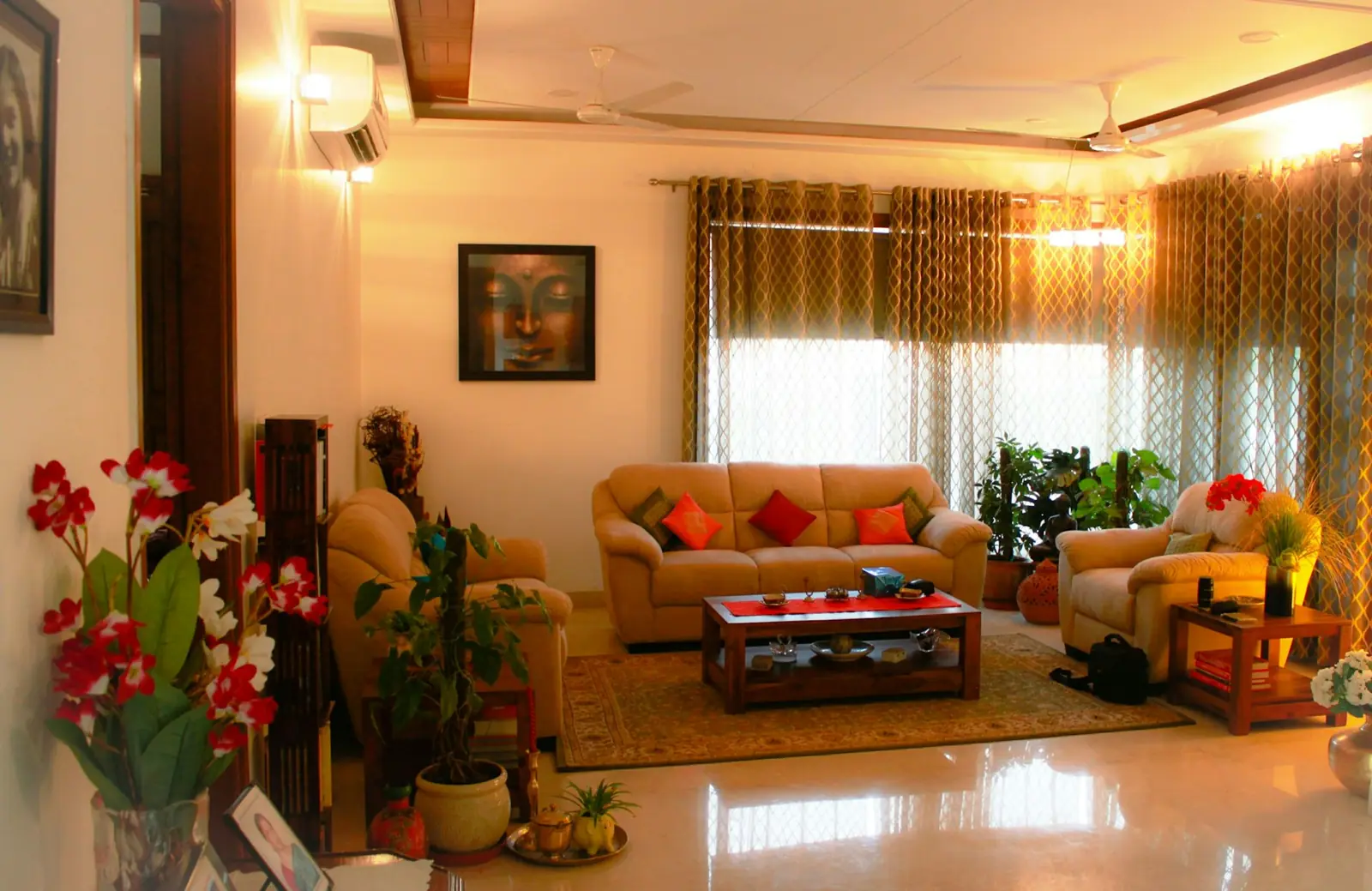
A warmly lit living room with sofas and plants
Fans, lights and AC through long summer days.
A grandmother smiling at a baby on a bed
Panels built to last 25 years and more.
Subsidy and loan

The government pays part of your system

₹78,000Central subsidy for a home system of 3 kW or larger. ₹30,000 for 1 kW, ₹60,000 for 2 kW.
₹30,000Chhattisgarh state subsidy for 2 kW and above. ₹15,000 for 1 kW.
₹1,08,000Together, what a 3 kW home system can get. We file the paperwork for you.

These amounts are set by the government and can change. PM Surya Ghar runs until 31 March 2027.

Who can claim it

The subsidy conditions

  • A residential CSPDCL connection in your name
  • Made-in-India (DCR) panels from the approved list
  • Installed by a vendor registered on the PM Surya Ghar portal
  • Your home has not claimed a rooftop solar subsidy before
Pay over time

The PM Surya Ghar loan

  • Up to ₹2 lakh with no collateral and no income proof, for systems up to 3 kW
  • Interest linked to the RBI repo rate, around 6 to 7% a year at public sector banks
  • Up to 10 years to repay, with the first 6 months free of EMIs
  • Bigger systems up to 10 kW can borrow up to ₹6 lakh at home-loan rates
Documents

Keep these ready

DocumentWhy it is needed
Latest electricity billYour CSPDCL consumer number and sanctioned load
Aadhaar cardYour identity on the national portal
Property ownership proofTo show the roof is yours to use
Bank passbook or cancelled chequeThe subsidy is paid straight into this account
PAN cardNeeded for loans above ₹2 lakh
Society approval (flats only)Permission to use the shared roof

Read the full CSPDCL net metering and subsidy guide

Our process

From first visit to first unit

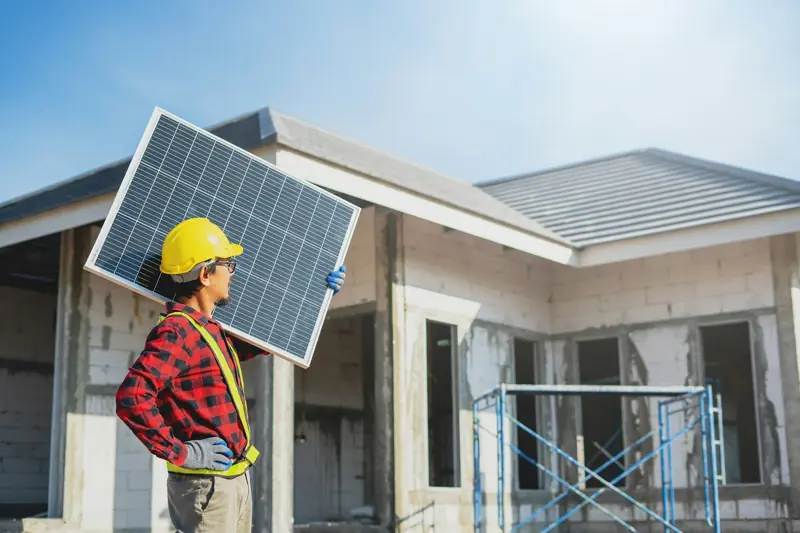
  1. A solar installer in a hard hat carrying a panel beside a house
    Stop 1

    Free site visit

    We measure your roof, check shade and wiring, and go through your last few bills.

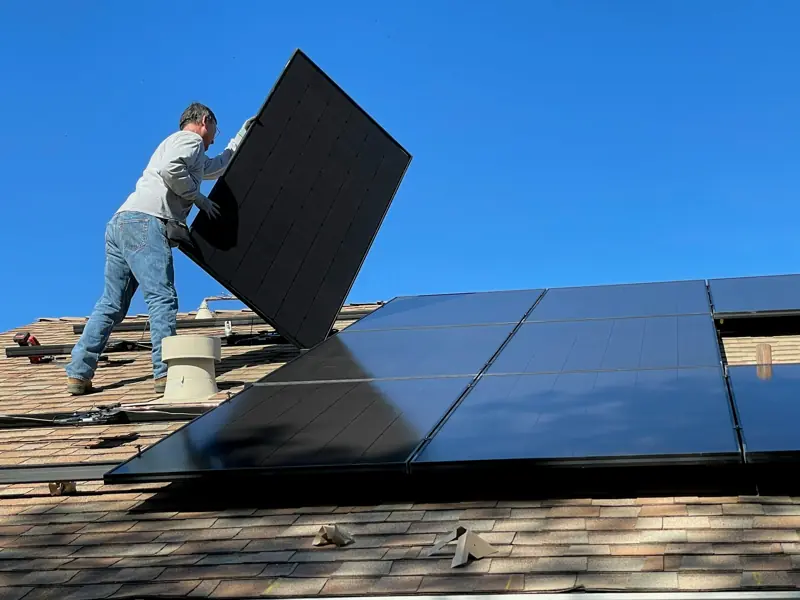
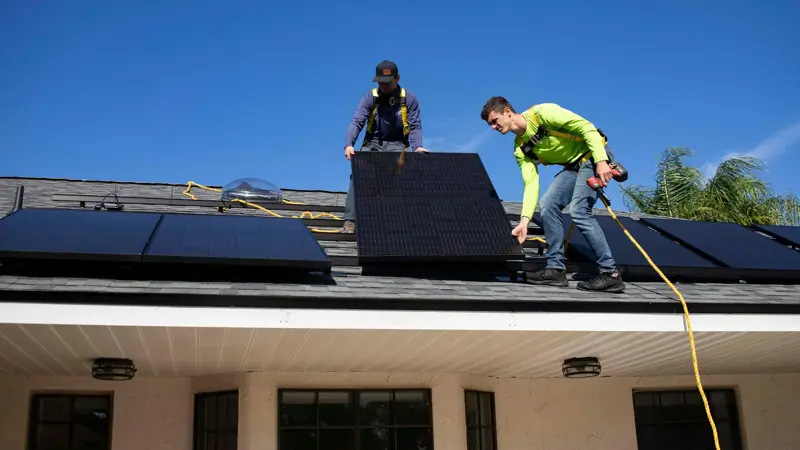
  2. An installer placing a black solar panel on a roof
    Stop 2

    Design and quote

    You get a system design, the parts we recommend and why, and one clear price.

  3. Two installers fitting solar panels on a house roof
    Stop 3

    Installation

    Our team mounts the structure, panels and inverter, and tests everything.

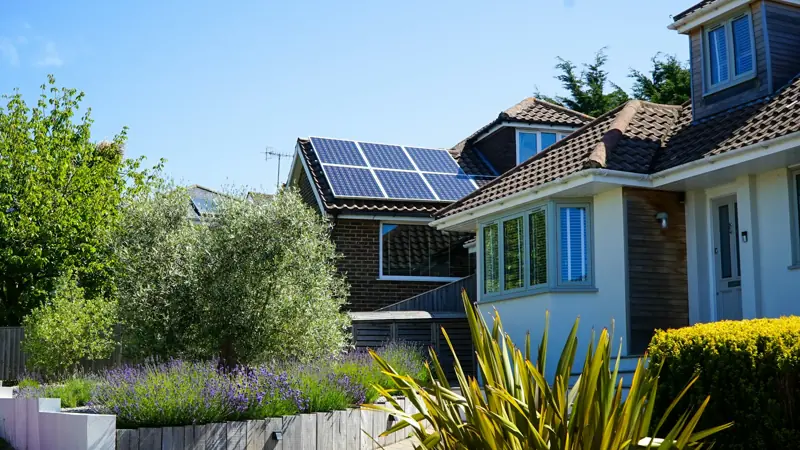
  4. A house with solar panels on its roof on a sunny day
    Stop 4

    Net meter and switch-on

    We file the net meter and subsidy paperwork. Once the meter is in, your roof starts paying.

See all 12 steps, every part we use, and what you get in writing

Before you sign

Six questions to ask any solar company, including us

A rooftop system should run for 25 years. These answers tell you whether it will.

  • Are the panels DCR and on the approved list?If not, you lose the subsidy.
  • What does each warranty cover, and for how long?Panels, inverter and the installation work each have their own. Ask for them in writing.
  • What is the structure made of, and how high is it?Galvanised steel resists rust. Height decides whether you can still use the roof.
  • Who files the net meter and subsidy paperwork?It should be the installer, with you only signing and uploading.
  • Who do I call if output drops?Ask how service works after installation, and how fast someone comes.
  • Can I see an itemised quote?Panels, inverter, structure, wiring, net meter fees and GST, each on its own line.
Our promise

What you get from Rishabh Solar

[__] years

Installation warranty

Our own warranty on the structure, wiring and workmanship.

25 years

Panel performance

The panel maker's performance warranty, passed on to you in your name.

[__] visits

Free maintenance

Cleaning and health checks in the first [__] years.

What goes on your roof

Nine parts, each one named in your quote

Panels

Made in India, approved

DCR panels on the government's approved list, with serial numbers and certificates you can check.

Inverter

Certified, with an app

A grid-tied inverter certified to Indian standards, with Wi-Fi monitoring of daily output.

Structure

Built for 150 km/h winds

Hot-dip galvanised steel to MNRE's specification, with stainless steel fasteners.

Protection

DC and AC safety boxes

Fuses, isolators, breakers and surge protection on both sides of the inverter.

Earthing

Three separate earths

For the panels and structure, the inverter, and the lightning arrester.

Wiring

UV-resistant solar cable

Rated for 25 years of rooftop sun, with matched connectors.

See every part and the standards we follow

Questions

Questions homeowners ask us

How much subsidy can I get for my home?

Under PM Surya Ghar, the central subsidy is ₹30,000 for a 1 kW system, ₹60,000 for 2 kW and ₹78,000 for 3 kW or larger. Chhattisgarh adds ₹15,000 for 1 kW and ₹30,000 for 2 kW and above. So a 3 kW home system can get up to ₹1,08,000. These amounts are set by the government and can change.

What is net metering?

A net meter counts power in both directions. Power you take from the grid adds to your bill, and surplus solar power you send to the grid is credited against it. You pay only for the difference.

Does solar work in the monsoon or on cloudy days?

Yes, at lower output. Panels still generate from diffused light. We size your system on a full year of sun, so strong months make up for weaker ones.

Will I have power during a power cut?

A standard grid-connected system switches off during a power cut for the safety of line workers. If backup matters to you, we design a hybrid system with a battery.

How much maintenance do panels need?

Very little. Panels need washing every couple of weeks to clear dust, and a yearly check of wiring and the inverter.

How much roof space do I need?

Plan for about 100 square feet of shade-free roof for every 1 kW. A typical 3 kW home system needs around 300 square feet.

I live in a flat. Can I still get solar?

Yes, with your housing society's approval to use the roof. Societies can also install a system for common areas like lifts, water pumps and lights, which has its own subsidy of ₹18,000 per kW under PM Surya Ghar.

Can I take a loan for solar?

Yes. Under PM Surya Ghar, public sector banks give collateral-free loans of up to ₹2 lakh for systems up to 3 kW, at interest linked to the repo rate, with up to 10 years to repay. You apply through the same national portal.

How long does the whole process take?

Installation itself takes a day or two. Most of the time goes into approvals: CSPDCL's feasibility check, then inspection and the net meter. The subsidy is paid into your bank account after the system is commissioned.

Does solar work at night?

No. At night you draw power from the grid as usual. The extra units your roof sent to the grid during the day are credited against that through the net meter.

What happens if I sell my house?

The system stays with the house and adds to its value. The net meter connection is transferred along with the electricity connection to the new owner.

Tomorrow's sunrise is already on its way.

Phone[phone number]
Email[email address]
Office[office address], Raipur
Commercial and industrial solar

Solar for shops, offices, factories and plants.

Systems that cut daytime bills, engineered around your load, your connection and your working hours. We are not tied to any one manufacturer, so every part is picked for your site.

10 kW to MWFrom a showroom roof to a factory shed or open land.

Request a proposal

For shops, offices, hospitals, schools and hotels.

10 to 500 kWTypical commercial systems, designed around your opening hours.
100 kW to MWIndustrial systems on sheds, roofs and open land.
25 yearsPanel life. No fuel, no noise and no moving parts.
Why businesses go solar

Solar works hardest when your business does

Daytime load

Power when you use it most

Shops, offices, schools and plants run their heaviest loads between 9 am and 5 pm, exactly when panels produce. Most units are used on site, at full value.

Tax benefit

40% depreciation in year one

Businesses can claim accelerated depreciation of 40% on a solar plant in the first year under Section 32 of the Income Tax Act. Ask your CA how it applies to your books.

Price stability

Fix part of your power cost

Once installed, the units your roof makes cost nothing extra for 25 years, whatever happens to grid tariffs.

Buyers and lenders

Cleaner supply chains

Large buyers and exporters increasingly ask suppliers about their energy source. Solar gives you a clear answer.

Who we serve

Two kinds of business, two kinds of system

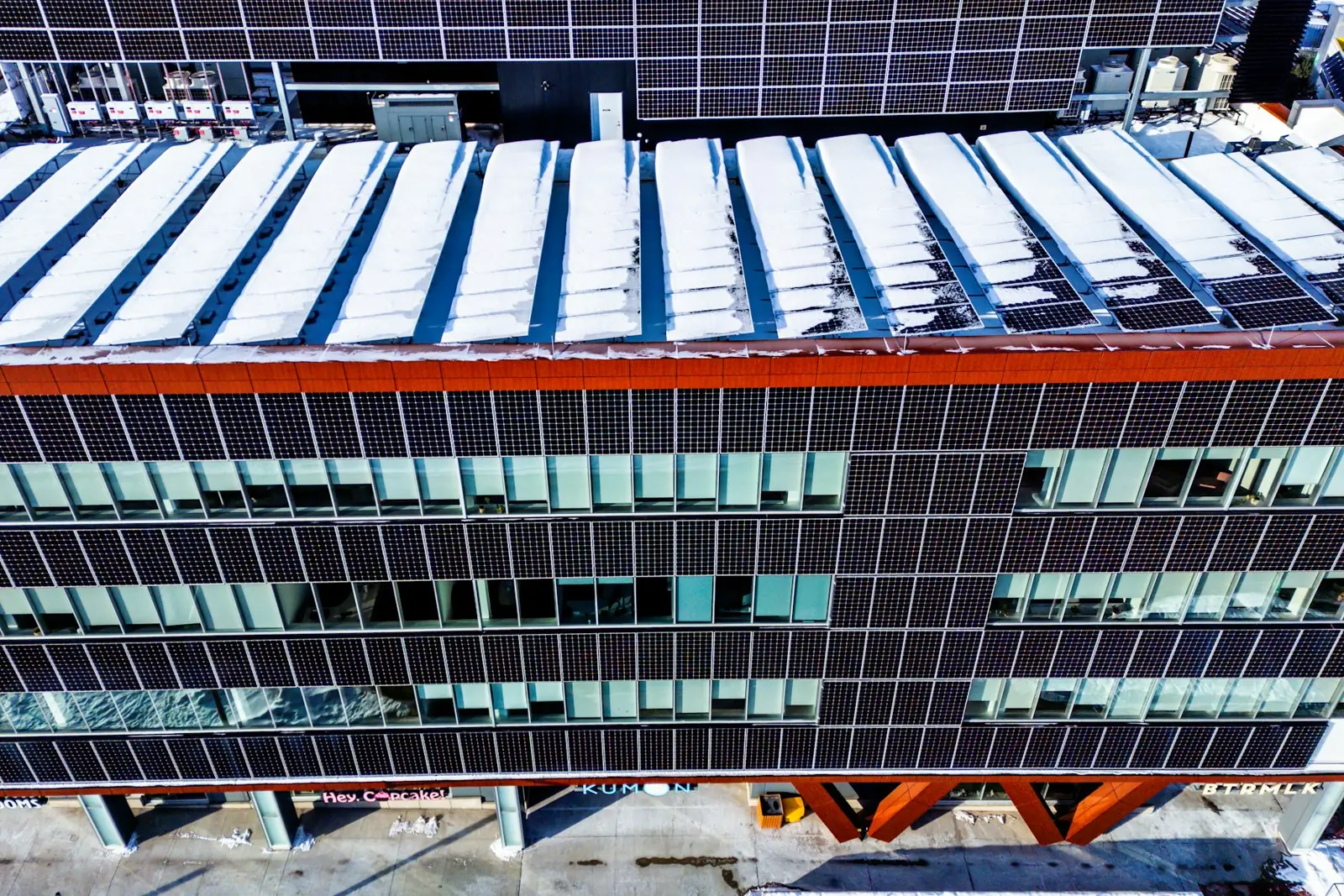
A commercial building with solar panels across its roof
Commercial

Shops, offices, hospitals and schools

Systems that cut daytime bills, when your lights, ACs and equipment run hardest.

  • Typically 10 to 500 kW
  • Designed around your opening hours
  • Net metering approvals
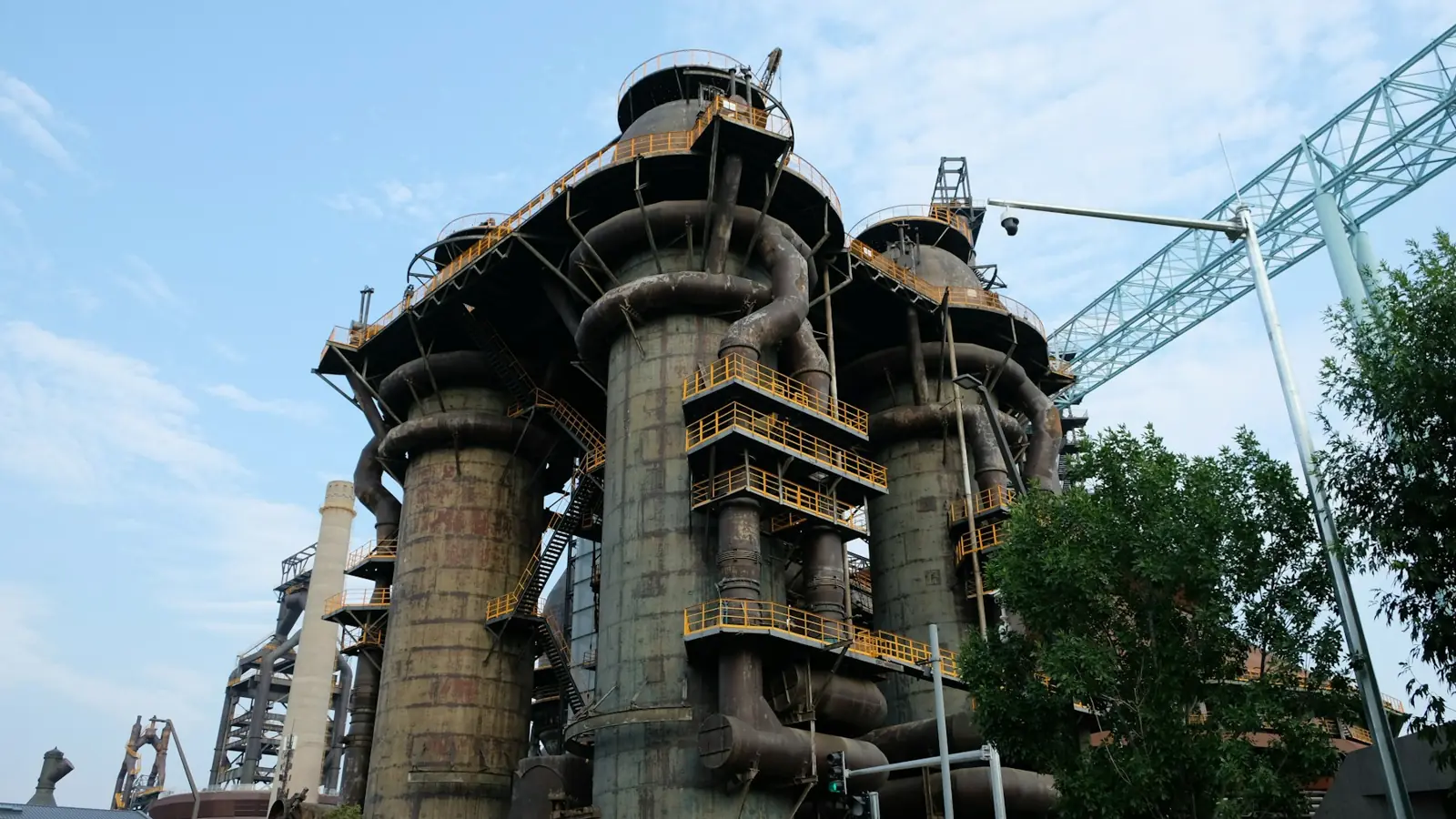
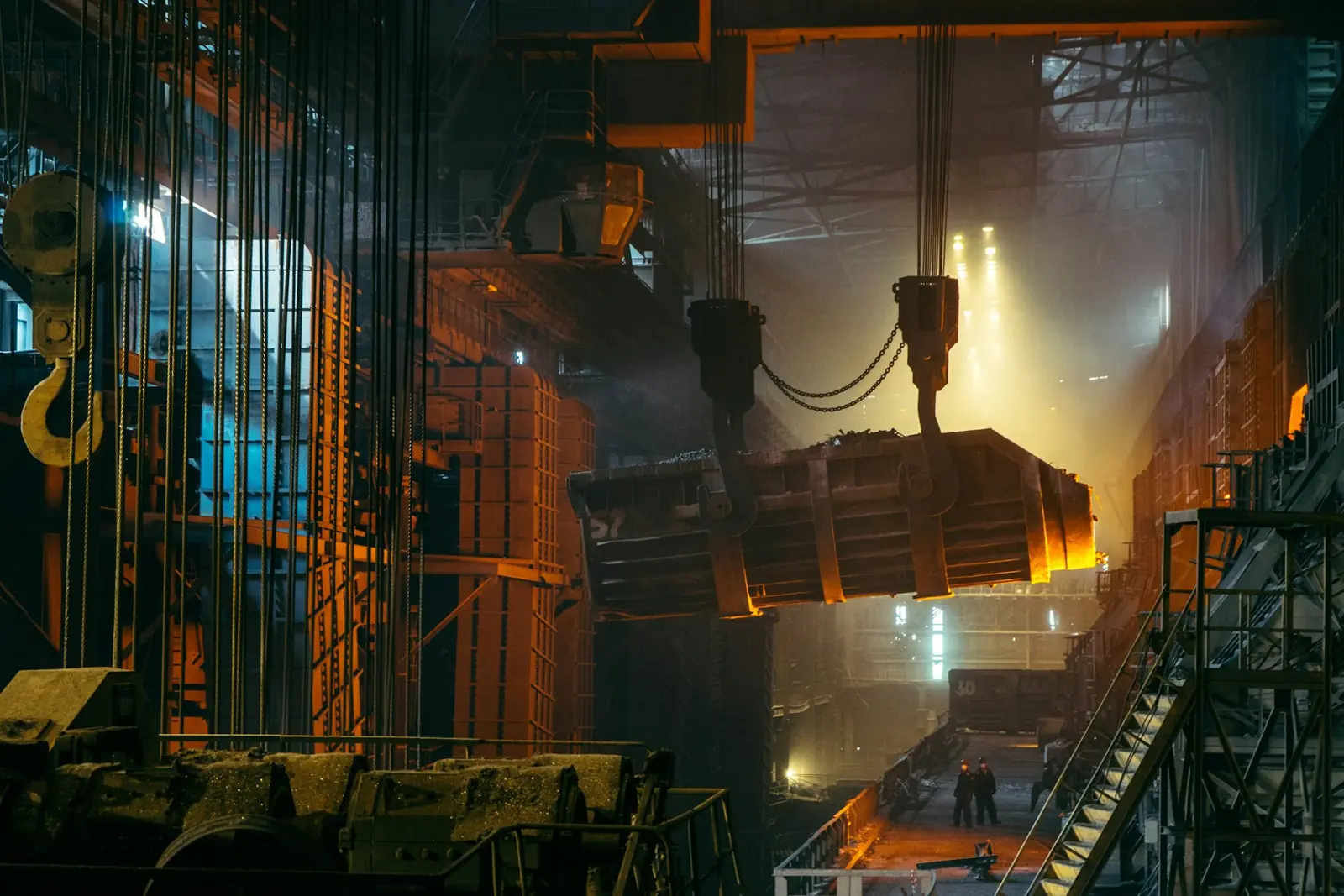
A crane pouring molten metal inside a steel plant
Industrial

Factories, mills and warehouses

Large systems on sheds, roofs and open land, engineered around your load and connection.

  • From 100 kW to megawatts
  • Study of load, HT/LT connection and bills
  • Structural check of sheds
Sizing

How big a system your site needs

SystemUnits it makes a monthRoof or land neededTypical user
25 kWAbout 3,000About 2,500 sq ftShop, clinic or small office
50 kWAbout 6,000About 5,000 sq ftSchool, hotel or showroom
100 kWAbout 12,000About 10,000 sq ftHospital, college or cold storage
250 kWAbout 30,000About 25,000 sq ftRice mill, warehouse or mall
500 kW and moreAbout 60,000+About 50,000 sq ft+Steel, rolling and process plants

Based on about 120 units a month per kW and about 100 sq ft per kW. A rooftop system on net metering cannot be larger than your sanctioned load or contract demand. We size it from 12 months of your bills.

Ways to set it up in Chhattisgarh

Your roof is one option. Not the only one.

Net metering

On your own roof

Panels on your roof or shed, connected through a CSPDCL net meter. Units you use are saved; surplus is credited against your bill.

Group net metering

One plant, several of your connections

Under CSERC's 2022 guidelines, credit from one plant can be shared across your other CSPDCL connections. Plants of 1 kW to 500 kW qualify.

Virtual net metering

The plant somewhere else

If your roof is too small, the plant can sit on other land and its output counts against your bills. CSERC confirmed in January 2026 that it does not need to be on your premises.

Ground mount

On open land you own

For plants and mills with spare land, a ground-mounted array can be larger and easier to clean than a roof system.

Which set-up you qualify for depends on your connection type, load and CSERC's current rules. We check this during the site study.

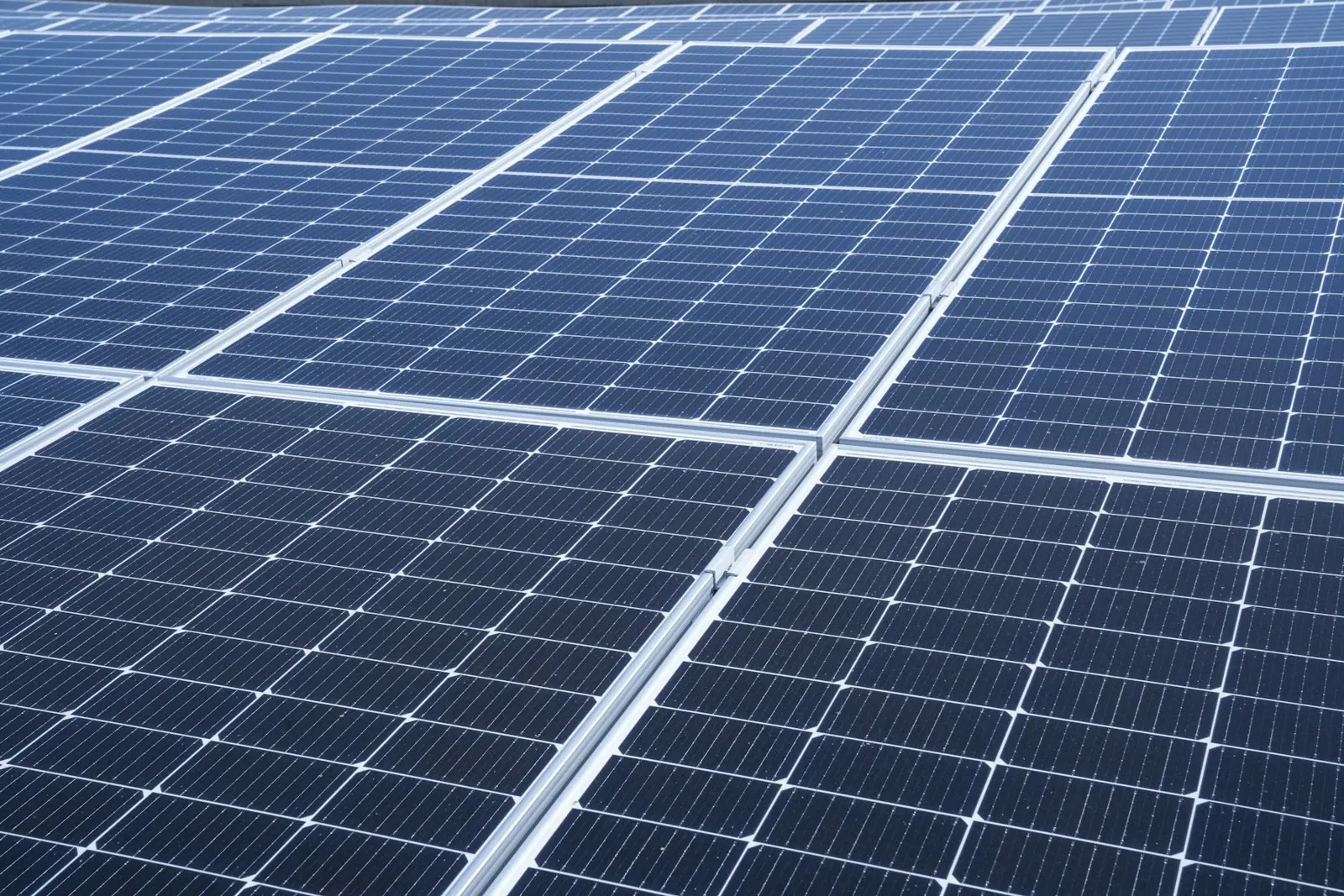
Close view of rows of solar panels on a large roof
How it works

Your daytime load, matched to the sun

  1. Panels turn light into power.Sized on a full year of Raipur sun, so strong months make up for weaker ones.
  2. The inverter makes it usable.It turns direct current into the alternating current your machines and equipment already run on.
  3. Your site uses it first.Every unit is used right away by whatever is running, and is a unit you don't buy from the grid.
  4. Surplus earns credit.Extra power flows out through a net meter and is credited against your bill.
Savings

Estimate your savings

Monthly electricity bill
₹50,000
You could save about₹0 a year
System size0 kW
Roof space0 sq ft
System price₹0
Subsidy₹0
You pay₹0
Pays back in0 years
25 years of panel life: paying back, then free power
Paying back

Your system

No two sites get the same system

We are not tied to any one manufacturer, so we pick each part for your site. Choose your site and your priority to see how the recommendation changes.

What is the system going on?

What matters most to you?

How much shade does the site get?

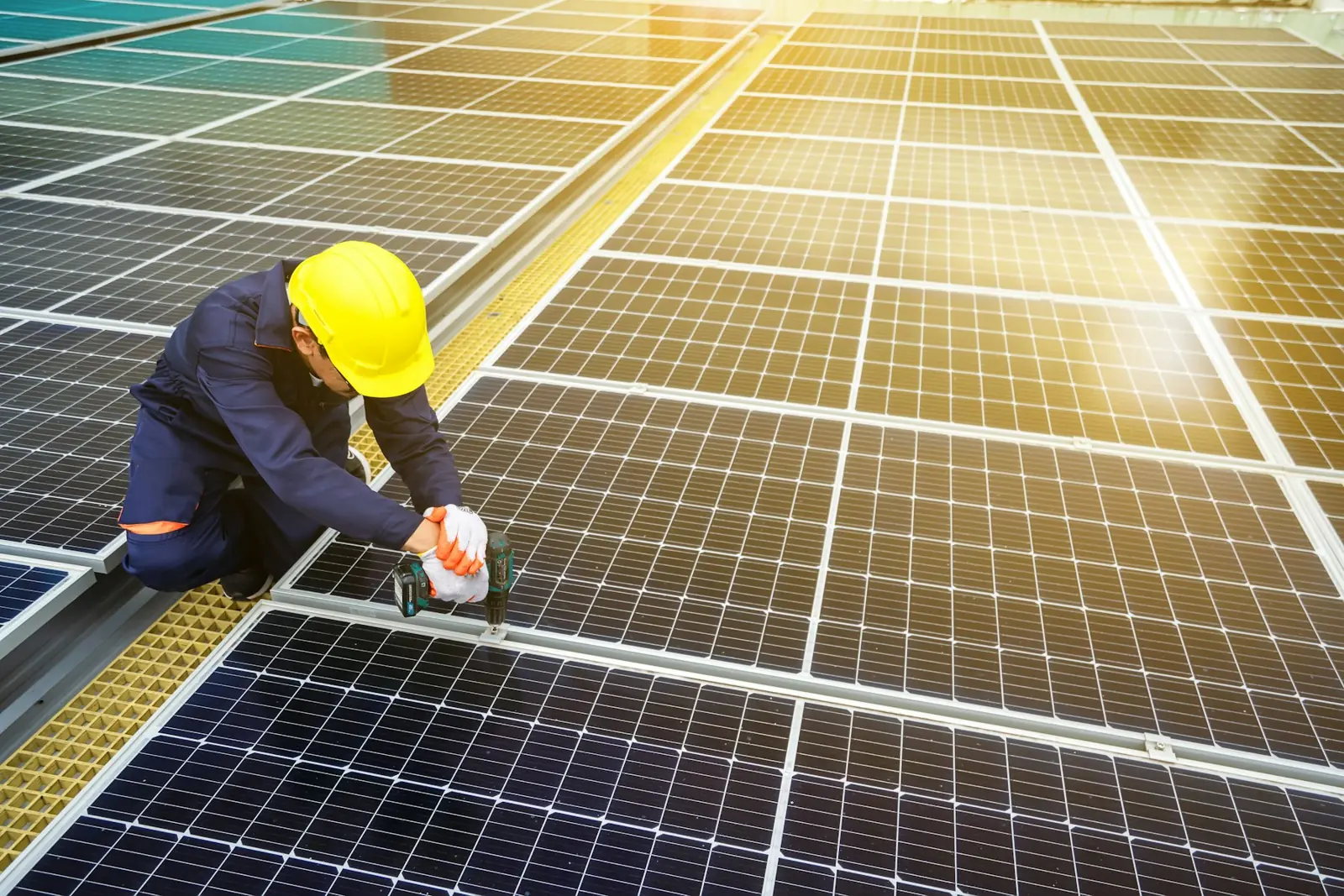
A technician in a hard hat checking a large rooftop solar array

A likely starting point

The final design comes after we measure your site.

Our process

From first visit to first unit

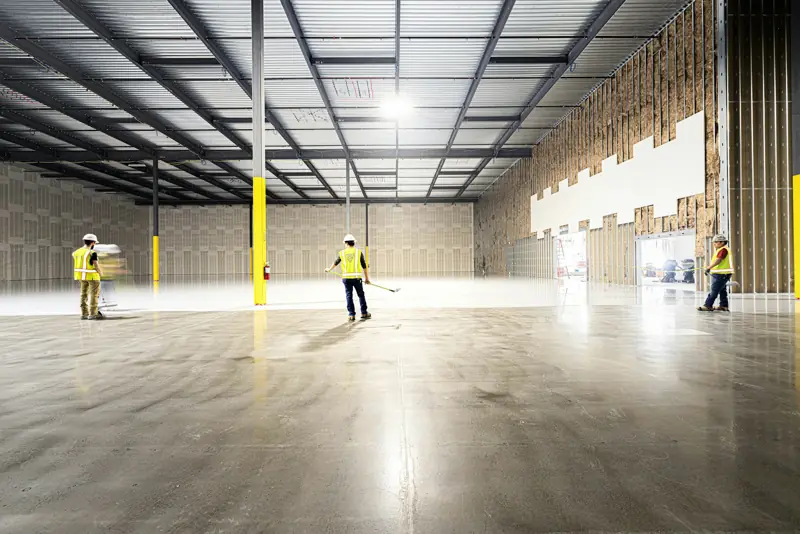
  1. Engineers in safety gear inspecting a large empty warehouse
    Stop 1

    Site study

    We study your load, HT/LT connection and bills, and check the structure of your sheds and roofs.

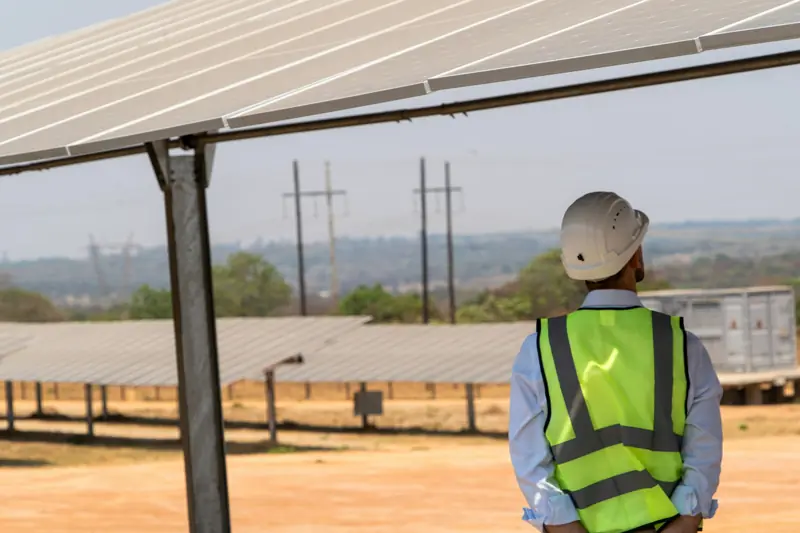
  2. An engineer in a hard hat and safety vest looking over a ground-mounted solar array
    Stop 2

    Design and proposal

    You get a system design, the parts we recommend and why, and one clear price.

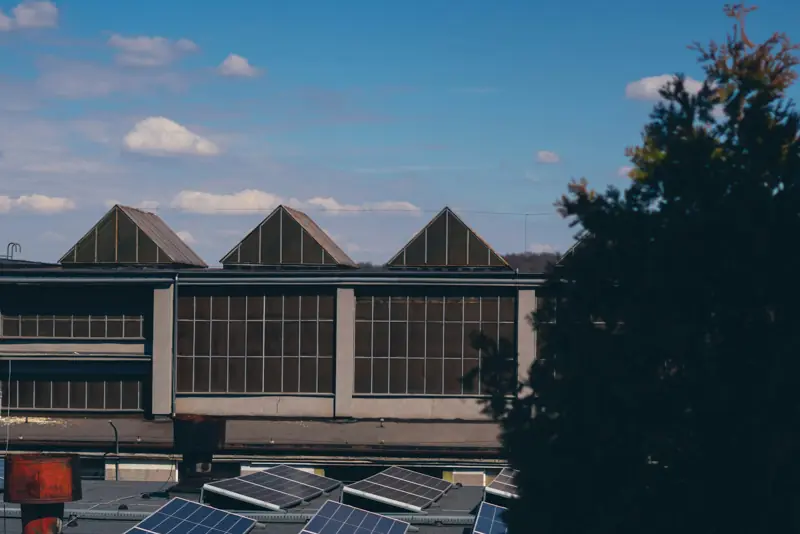
  3. A factory with a sawtooth roof and solar panels on the roof in front
    Stop 3

    Installation

    Our team mounts the structure, panels and inverters, and tests everything.

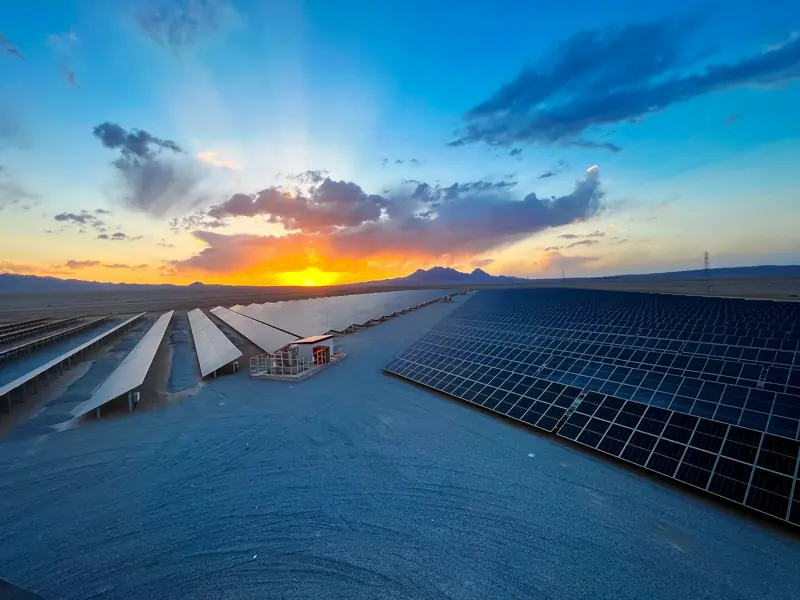
  4. Rows of ground-mounted solar panels under an evening sky
    Stop 4

    Net meter and switch-on

    We handle the net metering approvals. Once the meter is in, your roof starts paying.

See all 12 steps, every part we use, and what you get in writing

What goes on your roof

Nine parts, each one named in your quote

Panels

Made in India, approved

DCR panels on the government's approved list, with serial numbers and certificates you can check.

Inverter

Certified, with an app

A grid-tied inverter certified to Indian standards, with Wi-Fi monitoring of daily output.

Structure

Built for 150 km/h winds

Hot-dip galvanised steel to MNRE's specification, with stainless steel fasteners.

Protection

DC and AC safety boxes

Fuses, isolators, breakers and surge protection on both sides of the inverter.

Earthing

Three separate earths

For the panels and structure, the inverter, and the lightning arrester.

Wiring

UV-resistant solar cable

Rated for 25 years of rooftop sun, with matched connectors.

See every part and the standards we follow

Questions

Questions businesses ask us

What is net metering?

A net meter counts power in both directions. Power you take from the grid adds to your bill, and surplus solar power you send to the grid is credited against it. You pay only for the difference.

Does solar work in the monsoon or on cloudy days?

Yes, at lower output. Panels still generate from diffused light. We size your system on a full year of sun, so strong months make up for weaker ones.

Will the system run during a power cut?

A standard grid-connected system switches off during a power cut for the safety of line workers. If backup matters to you, we design a hybrid system with a battery.

How much maintenance do panels need?

Very little. Panels need washing every couple of weeks to clear dust, and a yearly check of wiring and the inverter.

How much roof space do I need?

Plan for about 100 square feet of shade-free roof for every 1 kW. A 100 kW system needs around 10,000 square feet.

Is there a size limit for net metering?

Yes. On net metering, the system at your premises cannot be larger than your sanctioned load or contract demand, and CSERC sets an upper limit for each scheme. Group and virtual net metering allow plants from 1 kW to 500 kW.

Is there a subsidy for businesses?

PM Surya Ghar is for homes and housing societies only. Businesses benefit instead through accelerated depreciation, which lets you claim 40% of the plant cost in the first year. Ask your CA how it applies to you.

Can our tin shed carry solar panels?

Usually yes. We check the shed's structure first, then fix rails directly to it with clamps, so the sheet is not drilled through and little load is added.

Can we track how much the plant produces?

Yes. Modern inverters connect to the internet and show daily output on a phone app, so you can spot a drop early.

Your roof is already in the sun. Put it to work.

Phone[phone number]
Email[email address]
Office[office address], Raipur
← Back to Rishabh Solar Guide

Rooftop solar in Chhattisgarh: CSPDCL net metering and subsidy, step by step

How a solar system gets connected to CSPDCL's grid, how the PM Surya Ghar subsidy reaches your bank, and what you need at each step. Written for homeowners and businesses in Raipur and across Chhattisgarh.

Who is involved

What net metering means

A net meter counts electricity in both directions. Units you take from CSPDCL add to your bill. Surplus units your panels send to the grid are credited against it. You pay only for the difference.

Two limits apply. The solar system at your premises cannot be larger than your sanctioned load or contract demand. And the total solar connected to your local transformer is capped, so CSPDCL checks feasibility before approving a new system.

For homes: the PM Surya Ghar process

  1. Register on pmsuryaghar.gov.in. Choose Chhattisgarh and CSPDCL, then enter your consumer number and mobile number.
  2. Apply for rooftop solar and choose the capacity you want.
  3. Feasibility: CSPDCL checks that your sanctioned load and meter can support the system and net metering.
  4. Choose a registered vendor on the portal and get the system installed.
  5. Submit installation details and apply for the net meter.
  6. Inspection and net meter: CSPDCL inspects the system and installs the bidirectional meter. The system is then commissioned.
  7. Subsidy: submit your bank details on the portal. The central subsidy is paid directly into your account, about 15 days after you request it. Chhattisgarh's state subsidy is released by CSPDCL through its own process.

How much subsidy

System sizeCentral (PM Surya Ghar)Chhattisgarh stateTotal
1 kW₹30,000₹15,000₹45,000
2 kW₹60,000₹30,000₹90,000
3 kW and above₹78,000₹30,000₹1,08,000
Housing society, common areas₹18,000 per kW, up to 500 kWCheck current schemeDepends on size

Amounts as published for 2026. The government can change them, and PM Surya Ghar runs until 31 March 2027.

Conditions for the subsidy

Documents

The loan

Public sector banks offer PM Surya Ghar loans through the same portal. For systems up to 3 kW, you can borrow up to ₹2 lakh without collateral or income proof, at interest linked to the RBI repo rate (around 6 to 7% a year), with up to 10 years to repay and a 6-month break before EMIs start. For 3 to 10 kW, banks lend up to ₹6 lakh at home-loan rates, with income proof. The subsidy is credited to the loan account.

For businesses

The PM Surya Ghar subsidy is for homes and housing societies only. Businesses connect through the same CSERC net metering rules, with a few differences.

Where to check the latest rules

This guide explains the process in plain words. It is not legal or tax advice, and the official portals are the final word.

← Back to Rishabh Solar How we work

Every step of your installation, and every part that goes on your roof

No black boxes. This page shows what we do from the first call to the day your roof starts paying, what each part is, and what you get in writing at the end.

The 12 steps

#StepWhat happensWhoTypical time
1Call and bill reviewWe read your last 12 months of bills to see how many units you use, and when.You and usSame day
2Site surveyWe measure the roof, check shade from trees and buildings through the day, check the roof's strength, look at your wiring and meter, and note your sanctioned load.Us[__] days after your call
3DesignPanel layout drawn to your roof, a single-line wiring diagram, the parts list, and the units we expect it to make each month.Us[__] days
4Itemised quote and agreementEvery part on its own line, with brand, quantity and GST shown. You sign only when it is clear.You and usWhen you are ready
5Portal applicationWe register you on the PM Surya Ghar portal (homes) or apply to CSPDCL directly (businesses). CSPDCL checks feasibility.Us, then CSPDCLUsually 1 to 2 weeks
6Material checkBefore anything goes up, we match panel serial numbers and DCR certificates to the paperwork, and check the inverter and structure against the order.UsOn delivery
7StructureThe mounting frame is anchored to your roof, levelled, and angled to face south at a tilt suited to Raipur's latitude (about 21°).Our teamDay 1 on site
8Panels and DC wiringPanels are clamped to the frame and wired in strings with UV-resistant solar cable, into a DC box with fuses and surge protection.Our teamDay 1 to 2
9Inverter, AC wiring, earthing and lightning arresterThe inverter is mounted and wired through an AC box with breakers and surge protection. Separate earthing is made for the panels and structure, the inverter, and the lightning arrester.Our teamDay 2
10TestingWe check panel voltages, polarity, insulation and earth resistance, and record every reading.Our teamBefore switch-on
11CSPDCL inspection and net meterCSPDCL inspects the system and fits the net meter. The system is commissioned, and for homes we raise the subsidy request.Us, then CSPDCLDepends on CSPDCL
12HandoverWe walk you through the system and give you the handover kit (below), and set up the monitoring app on your phone.UsOn switch-on

Times for steps 5 and 11 depend on CSPDCL and the national portal, not on us. Installation itself usually takes one to two days for a home.

What goes into your system

PartWhat it doesWhat we use
Solar panelsTurn sunlight into DC electricityMade-in-India (DCR) panels on the government's approved list (ALMM), monocrystalline, [__] W each. Brand: [__]
InverterTurns DC into the AC your home or plant uses, and tracks outputGrid-tied inverter certified to Indian standards, with Wi-Fi monitoring. Brand: [__]
Mounting structureHolds the panels at the right angle for 25 yearsHot-dip galvanised steel, designed for wind speeds of 150 km/h as MNRE's specification requires, with stainless steel fasteners
DC cables and connectorsCarry power from panels to inverterUV-resistant solar cable with matched connectors
DC box (DCDB)Protects the panel sideFuses, isolator and surge protection device
AC box (ACDB)Protects the building sideBreakers and surge protection device
EarthingCarries fault current safely into the groundSeparate earthing for panels and structure, inverter, and lightning arrester
Lightning arresterProtects the system and building from strikesMounted above the array, earthed on its own
Net meterCounts units in both directionsBidirectional meter fitted by CSPDCL

Standards we follow

What you get in writing

The itemised quote

The site survey report

The handover kit

After installation

Brands we use

[Panel and inverter brands to be added.] We are not tied to any one manufacturer, so the final choice depends on your site and budget.

← Back to Rishabh Solar Legal

Terms and conditions

1. About these terms

These terms apply when you use this website or ask Rishabh Solar Solutions, Raipur, Chhattisgarh ("we", "us") for a quotation or a solar system. Your signed order or agreement with us takes priority over these terms where they differ.

2. Estimates on this website

Savings, system sizes, prices and payback figures shown on this website are estimates based on stated assumptions. They are not offers. Your actual figures depend on your site, your usage, CSPDCL tariffs, weather and current government rules.

3. Quotations and prices

4. Payment

Payment is made in stages set out in your order: [__% on booking, __% before material dispatch, __% after installation]. If a payment is overdue, we may pause work until it is made.

5. Subsidy, loans and net metering

6. Installation

7. Warranties

8. Cancellation and refunds

[Company to set: what happens if you cancel before survey, after survey, and after material is ordered, and how refunds are paid.]

9. Limit of liability

Our liability for any claim is limited to the amount you paid us for the system. We are not liable for indirect losses, including lost savings or a lost subsidy caused by decisions of government bodies.

10. Governing law

These terms are governed by the laws of India. Any dispute will first be discussed in good faith, and if not resolved, will be decided by the courts at Raipur, Chhattisgarh.

11. Changes and contact

We may update these terms. The version on this page applies from the date shown below. For questions, contact us at [email address] or [phone number].

Last updated: [date]
← Back to Rishabh Solar Legal

Privacy policy

What we collect

When you ask for a quotation, we collect what you type into the form: your name, mobile number, email, city or plant location, roof or building type, connection details and electricity bill. When we visit your site, we may also take photographs of the roof and electrical panel.

Why we use it

Who we share it with

We do not sell your data. We share it only where needed for your project: with CSPDCL, the PM Surya Ghar portal and your chosen bank when filing your applications, and with equipment makers when registering warranties in your name.

How long we keep it

We keep enquiry details for [__] months if you do not go ahead, and project records for as long as your warranties last or the law requires.

Your rights

You can ask us to show, correct or delete your personal data, or withdraw your consent to being contacted, at any time. Write to our grievance officer below and we will respond within [__] days.

Contact

Grievance officer: [name], Rishabh Solar Solutions, [office address], Raipur, Chhattisgarh. Email [email address].

Last updated: [date]